
Loving the Desert
A deeper dive into our need for less stimulation

If you read my last post on Two Kinds of Boring, you’ll recall that I distinguished between the kind of boredom that is meaningless, surface and false (think screens or relationships performed for status or approval) in contrast to the spacious and simple kind of boredom that opens up a life-giving emptiness and pain that we just might be able to fill with creativity and deeper engagement.
Our culture steers us toward the former because that surface boredom sets us up perfectly for being tempted by quick stimulation. The corporate technocracy that rules our digital world (and longs to rule it oh so much more) is ready with lures for our attention or dollars. At some level we know that those shortcuts to stimulation lead only to deeper boredom, but first we get our quick “hits” of whatever dopamine or other neurohormones are released when we give in to their lures.
This struggle between the lure of shortcuts and imitations, in contrast to the effort and engagement that lead us to lower levels of stimulation but higher levels of satisfaction is one of the central dynamics of addiction. One of the first sources that underlined this dynamic for me was Gerald May, when in his book, Addiction and Grace, he appealed for us all to “love our longing.”
One attitude, however, can make a fundamental difference in how we approach our attachments and our lives. It can prepare us for an embrace with God, I have alluded to it before as I have stressed the importance of claiming our longing for God, of consecrating our desire, and of being willing to tolerate spaciousness. To state it directly, we must come to love our longing. - Gerald May, Addiction and Grace
May’s classic on breaking free from addiction was written in 1988, with the subtitle, Love and Spirituality in the Healing of Addictions. Confessing that he has “by no means achieved victory over [his] own addictions,” he does feel that he has come to understand them deeply and witnessed many people breaking free. Somewhere between Christian and Buddhist spirituality, he outlines a movement toward an understanding of detachment1 - a “freedom of desire” not from desire. This can prevent our human desire for quick stimulations and imitations from getting in the way of our deeper desires for God or Love, for connection and engagement.
So, of course, we all know addictions that operate at some level in our lives. The degree of harm that they do depends on how much we become entrapped by them, blocking our ability to engage deeply with life and to connect with others in a sustained way. Once we become trapped in our dependent desires, we find that doing without our addicted desire feels like a desert of emptiness and pain.
Here is where May’s book left me with a thought that has stuck with me for decades, coming back to mind whenever I encounter patterns of addiction in my therapy office or elsewhere. Those that May describes as finding the grace to break free of addictions were those who found the ability “of being willing to tolerate spaciousness” — of “loving their longing” even while they are not (yet) experiencing the satisfaction of that longing.
This spaciousness is the essence of the better kind of boring, the kind we need to embrace more often. We need to love the desert to experience the deeper meaning of life to be found there.
One resistance to this that I experience myself and see frequently in clients is that the desert feels at first like deprivation — or, better to say, we interpret not getting the quick stimulation or zingy reward we started to imagine or hope for as a denial of something we want; it feels like a punishment or withholding. This is why I seek ways to paint the picture that embracing the desert is wholeness and self-nurture. It is not deprivation to know that the rewards that are subtler and less zingy, that come after a longer wait, are the rewards that lead to a fuller, richer life. When we come to believe it, we are awakened to grace, to freedom.
When a torn meniscus and displaced kneecap in one of my arthritic knees made me think my active days were numbered (and my doctor casually tossed out the rude comment that I was “too old”[!?] for a meniscus to heal), I chose physiotherapy rather than surgery. I was no instant fan of fifteen minutes of boring and unpleasant exercises every morning. But somewhere along the way, I started to believe in them. It actually felt like I was healing my knees as I exercised. I began to miss it if I was away from home and skipped them. Five years later, with a healed knee (in spite of the doc’s prognosis), I still do them “religiously” every morning because I’ve embraced the desert of boring and unpleasant exercise. What I truly experience is fifteen minutes of loving and protecting my knees, and they’re worth it.
In our times and our culture, it’s getting harder and harder to believe in the modest and slow rewards of the desert. It’s getting easier and easier to get addicted. Turning away from the rage-bait and drama, from the salty/fatty fast food, from the ads promising good times with good friends if we drink the right beer, from the chasing after “likes” and views, we find ourselves in a desert, and it doesn’t feel great, especially at first. It feels lonely and deprived, like we’ve been overlooked when the rewards were passed out.
But if we can embrace the desert, loving our longing for something better, the spacious emptiness, even the hunger and the pain — the ache of not having what we want, what we feel we need — we eventually find ourselves with the grace of newly recalibrated senses: seeing, hearing, touching, tasting, smelling what we barely noticed before.
We are created to yearn: for spiritual connection, for something deeper than a life lived on the surface. Gerald May eloquently writes of finding in the desert a life-giving hunger for God, a blessed incompleteness. But I think his exalted language could block some of us from seeing that the reality of the spiritual connection we find in the desert comes in many varied and subtle disguises: like sitting on a couch watching some kids playing across the street and realizing it brings more happiness than expected, like welcoming the brief but real attention of a friend, like noticing how good a hot shower feels after a workout, like finding yourself humming a simple song from childhood as you walk down the street, like reading a poem or hearing a lyric and being amazed that someone knew how to give voice to a truth that resonates deep within. In the busyness of chasing desires, we easily overlook such moments; in the desert, they’re pure gold.
I find it helps to read the wisdom of those who have known the desert of simpler, slower pleasures as life. It helps to walk along Tinker Creek with Annie Dillard or to sit on a porch looking over Kentucky ridges with Wendell Berry, even to read the journals of Etty Hillesum as she refused to go into hiding as a Dutch Jewish woman under Nazi occupation (see below).
May we all find deeper life in the spaciousness of the desert.
I am not washed and beautiful, in control of a shining world in which everything fits, but instead am wandering awed about on a splintered wreck I’ve come to care for, whose gnawed trees breathe a delicate air, whose bloodied and scarred creatures are my dearest companions, and whose beauty beats and shines not in its imperfections but overwhelmingly in spite of them, under the wind-rent clouds, upstream and down. Simone Weil says simply, Let us love the country of here below. It is real; it offers resistance to love.
-Annie Dillard, Pilgrim at Tinker Creek
Finally will it not be enough,
after much living, after
much love, after much dying
of those you have loved,
to sit on the porch near sundown
with your eyes simply open,
watching the wind shape the clouds
into the shapes of clouds?…
(and then let’s recall that Berry wrote,
“To be quiet, even wordless, in a good place is a better gift than poetry.”)
Life may be brimming over with experiences, but somewhere, deep inside, all of us carry a vast and fruitful loneliness wherever we go. And sometimes the most important thing in a whole day is the rest we take between two deep breaths, or the turning inward in prayer for five short minutes. - Etty Hillesum
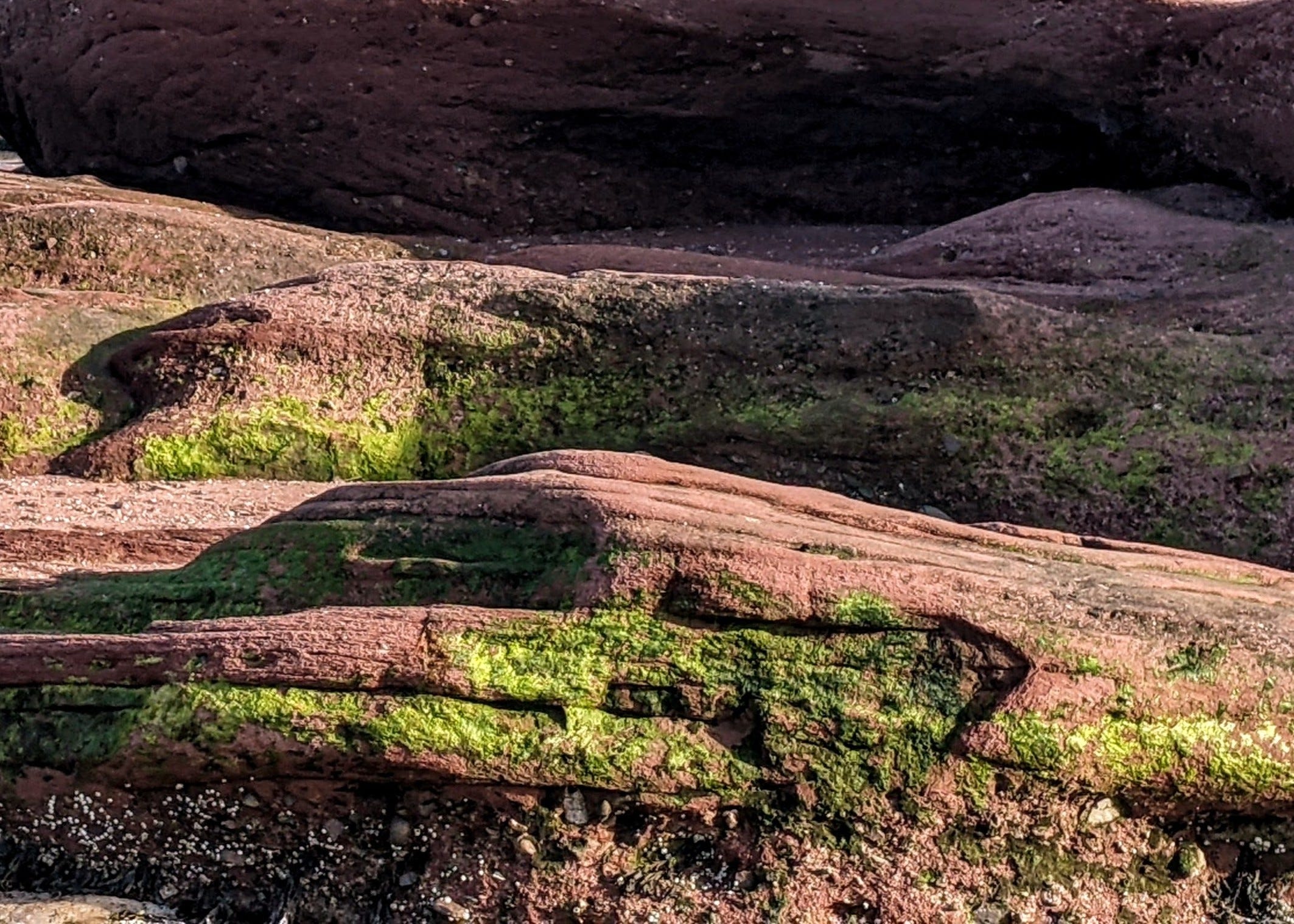
We are conditioned to believe that feelings of distress, pain, deprivation, yearning, and longing mean something is wrong with the way we are living our lives. Conversely, we are convinced that a rightly lived life must give us serenity, completion, and fulfillment. Comfort means “right” and distress means “wrong.” The influence of such convictions is stifling to the human spirit. Individually and collectively, we must somehow recover the truth. The truth is, we were never meant to be completely satisfied….
The specific struggles we undergo with our addictions are reflections of a blessed pain. To be deprived of a simple object of attachment is to taste the deep, holy deprivation of our souls. To struggle to transcend any idol is to touch the sacred hunger God has given us. In such a light, what we have called asceticism is no longer a way of dealing with attachment, but an act of love. It is a willing, wanting, aching venture into the desert of our nature, loving the emptiness of that desert because of the sure knowledge that God’s rain will fall and the certainty that we are both heirs and cocreators of the wonder that is now and of the Eden that is yet to be.
- Gerald May, Addiction and Grace
If your reading has been more psychological than contemplative, it’s easy to be a bit thrown by how contemplatives and classical spiritual writers use terms like attachment (mostly negatively) and detachment (mostly positively). It’s actually fascinating, if somewhat paradoxical, to ponder how that layers over the language of attachment theory. But this is just a footnote, and so I leave you to explore that paradox on your own.
Thank you. This is something that, even if you “know,” you need reminding of—often.
I so loved your post and after reading so many “intelligentsia” type posts about theology it was so refreshing! Thank you for giving me hope.